Idea Relay
Turning collaborative brainstorming into a playful, structured experience
Role
Product design lead
Scope
Product Strategy, UX Research, Product Design
Platform
Mobile
The Idea
Brainstorming works best when ideas build on one another, but most digital collaboration tools are designed around blank canvases, documents, or open-ended conversations.
I wanted to explore a different model.
What if generating ideas felt more like playing a game together?
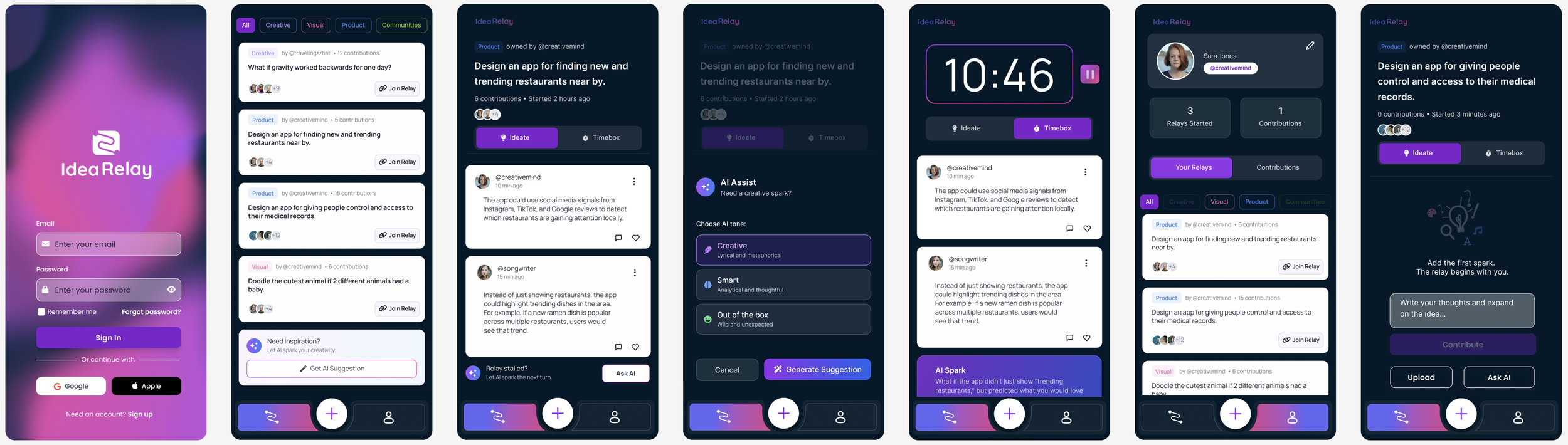
Idea Relay is a collaborative brainstorming concept where participants respond to prompts, build on each other's thinking, and pass ideas between one another through a structured creative exercise.
What I Wanted to Understand
The goal wasn't simply to design another brainstorming tool.
I wanted to understand how structure could make collaborative ideation feel easier and more engaging without limiting creativity.
I explored:
How people generate ideas individually and in groups
What causes brainstorming sessions to stall
How prompts influence creative thinking
How digital tools can encourage participation without adding complexity
I spoke with designers, product managers, and creative professionals about how they brainstorm and what gets in the way.
What I Learned
Blank canvases can create pressure
Complete freedom sounds ideal, but starting from nothing can make generating ideas harder.
Opportunity: Use prompts and constraints to give participants an easier starting point.
Collaboration needs structure
Open brainstorming can quickly become dominated by a few voices or lose focus.
Opportunity: Give everyone a defined opportunity to contribute.
Ideas become stronger when people build on them
Some of the most interesting concepts emerged when participants reacted to or expanded someone else's thinking.
Opportunity: Make building on ideas part of the core interaction rather than something that happens accidentally.
Exploring the Experience
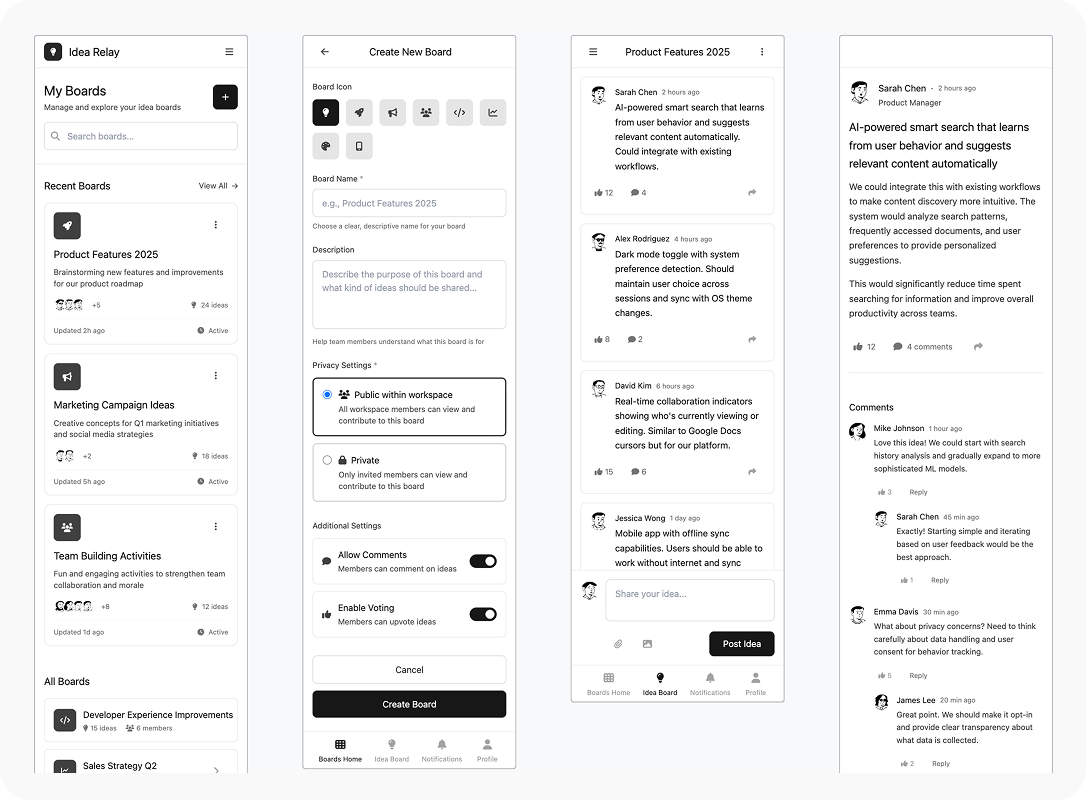
Shared board
The first concept centered around a collaborative board where participants could freely add and organize ideas.
It supported collaboration, but felt too similar to existing whiteboard tools.
What I learned: A shared space wasn't enough to create a distinctive brainstorming experience.
Prompt-based brainstorming
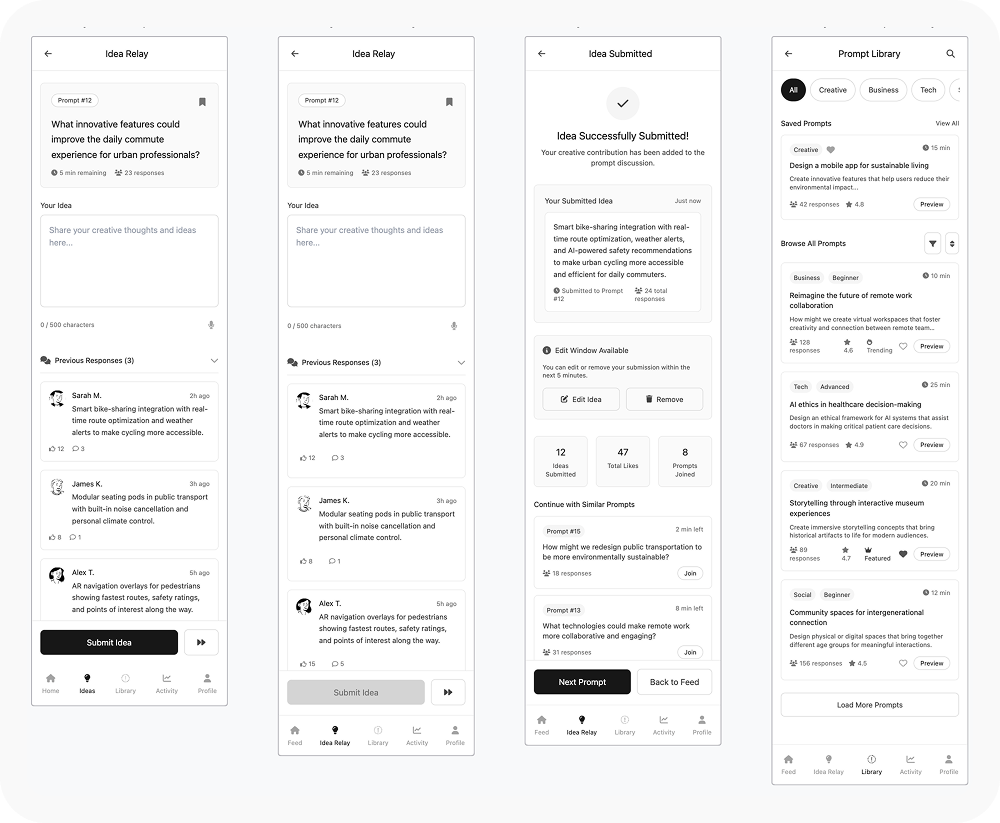
The next direction introduced prompts to help participants generate ideas.
This made starting easier but still felt like a traditional brainstorming exercise.
What I learned: Prompts helped generate ideas, but the collaboration itself needed more structure.
Relay-based ideation
The strongest concept turned brainstorming into a sequence.
One person starts an idea. Another receives it and builds on it. The idea continues moving through the group before everyone sees how it evolved.
What I learned: The interaction itself could become part of the creative experience.
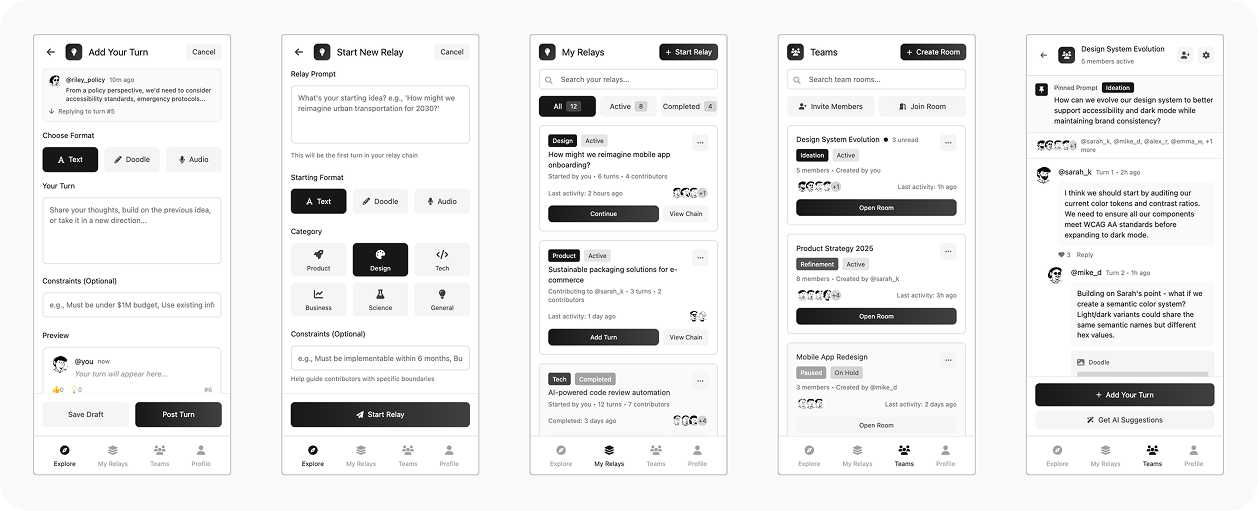
The Concept
Idea Relay combines structured prompts with collaborative idea-building to make brainstorming more participatory and playful.
Key Features:
Start with a prompt
A focused question gives participants a clear place to begin.
Create independently
Everyone contributes an initial idea, giving each participant an equal voice.
Pass it forward
Ideas are anonymously passed to another participant to expand, reinterpret, or challenge.
Reveal the results
The group sees how ideas evolved and can discuss, save, or continue developing the strongest concepts.
Build together
Each round adds another perspective and pushes the original idea somewhere unexpected.
What I Took Away
Idea Relay reinforced something I've seen repeatedly in product design:
Constraints don't necessarily limit creativity. The right constraints can help unlock it.
By turning brainstorming into a structured interaction rather than an open canvas, the concept explored how product design could encourage participation, reduce the pressure of starting from nothing, and help groups build on one another's thinking.