
Omni Platform Redesign
Redesigning a complex enterprise platform used by global marketing teams
Scope
Director, UX/UI
Role
UX Strategy, Product Design, Design Leadership
Platform
Web, SaaS
The Problem
Over time, Omni evolved into a collection of specialized tools built by different teams. While each application served an important function, the overall experience had become fragmented.
Users faced several challenges:
Inconsistent navigation and interaction patterns across applications
Difficulty finding relevant insights quickly
Frequent context-switching between tools to complete tasks
The issue went beyond usability. The platform reflected how the organization had built its products rather than how users actually worked.
This increased cognitive load and slowed critical workflows like campaign planning and performance analysis.
The Opportunity
What initially appeared to be a navigation problem revealed a larger opportunity: shift Omni from a collection of individual products to a connected platform experience.
How might we organize Omni around the way people work rather than the tools they need to use?
Our design goals were to:
Simplify navigation across the ecosystem
Connect workflows across products
Create consistent interaction patterns
Use AI to surface insights and guide users toward action
Research
Before defining a solution, I focused the team on understanding Omni as a system rather than a collection of screens.
I mapped relationships between products, workflows, users, and data to identify where friction accumulated across the ecosystem.
Our discovery included:
Stakeholder and user interviews
Cross-product UX audits
Workflow mapping
Competitive analysis of enterprise marketing platforms
This helped us understand not only where users struggled, but why the structure of the platform was creating that friction.
Insights
The research revealed that users rarely thought about their work in terms of individual Omni products.
They thought about what they needed to accomplish: build a campaign, understand an audience, evaluate performance, or take action.
Yet even simple workflows required navigating across multiple tools.
This became the strategic foundation for the redesign: organize the experience around user intent and workflows rather than product architecture.
Key Insights
Fragmented workflows increased cognitive load
Users frequently moved between multiple Omni products to complete a single task. Different navigation and interaction models forced them to continually reorient themselves.
Opportunity: Create a shared experience model that connects workflows across the platform.
Users needed faster paths from data to action
Users often discovered an insight in one product and needed another tool to act on it.
Opportunity: Bring insights, recommendations, and actions closer together within the experience.
Speed + efficiency were critical to adoption
Small inefficiencies multiplied across frequently repeated workflows.
Opportunity: Simplify common tasks and use AI to reduce the effort required to move from question to action.
Explorations
This direction allowed teams to customize dashboards with widgets and data panels.
While flexible, technical constraints prevented true user-level personalization. Early testing also showed that customization introduced additional complexity for new users.
What we learned: Flexibility didn't necessarily create clarity.
Modular dashboards
This model organized Omni around assets and deliverables within the ecosystem.
While it aligned with the existing platform architecture, users still needed to understand where capabilities lived and frequently switch between products.
What we learned: We were simplifying the structure without solving the workflow problem.
Asset-based navigation
The final direction organized the platform around how different personas actually worked.
Instead of asking users which product they needed, the experience focused on what they were trying to accomplish.
This significantly simplified the experience during usability testing and became the foundation for the redesign.
Workflow-based navigation
The Solution
The redesigned platform introduced a workflow-based experience that aligned Omni more closely with how users actually worked.
Key Features:
Simplified navigation
A shared navigation model allowed users to move across products and workflows without continually reorienting themselves.
Omni Assist (AI assistant)
Generative AI allowed users to begin with a question or task and receive contextual insights, recommendations, and next steps.
Improved feature discoverability
Contextual guidance and progressive disclosure surfaced capabilities when they became relevant.
Guided AI workflows & Consistent interaction patterns
AI connected insights to actions, simplifying complex workflows, while consistent patterns created a more unified experience across Omni.
Simplified navigation and a focus on AI
guided workflows.
Guided AI workflow task completion.
Cleaner surfacing of capabilities.
Reimagined design system
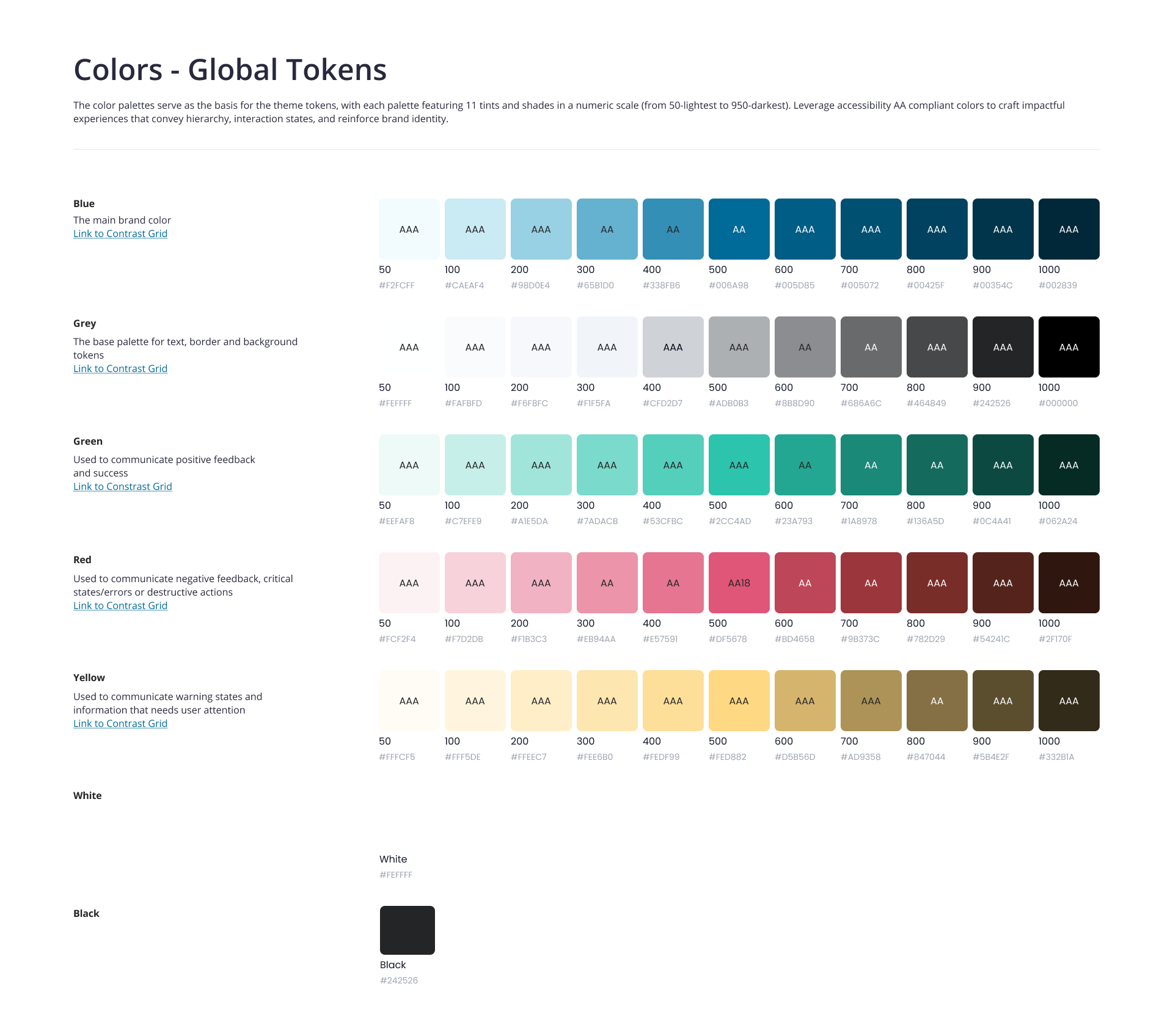
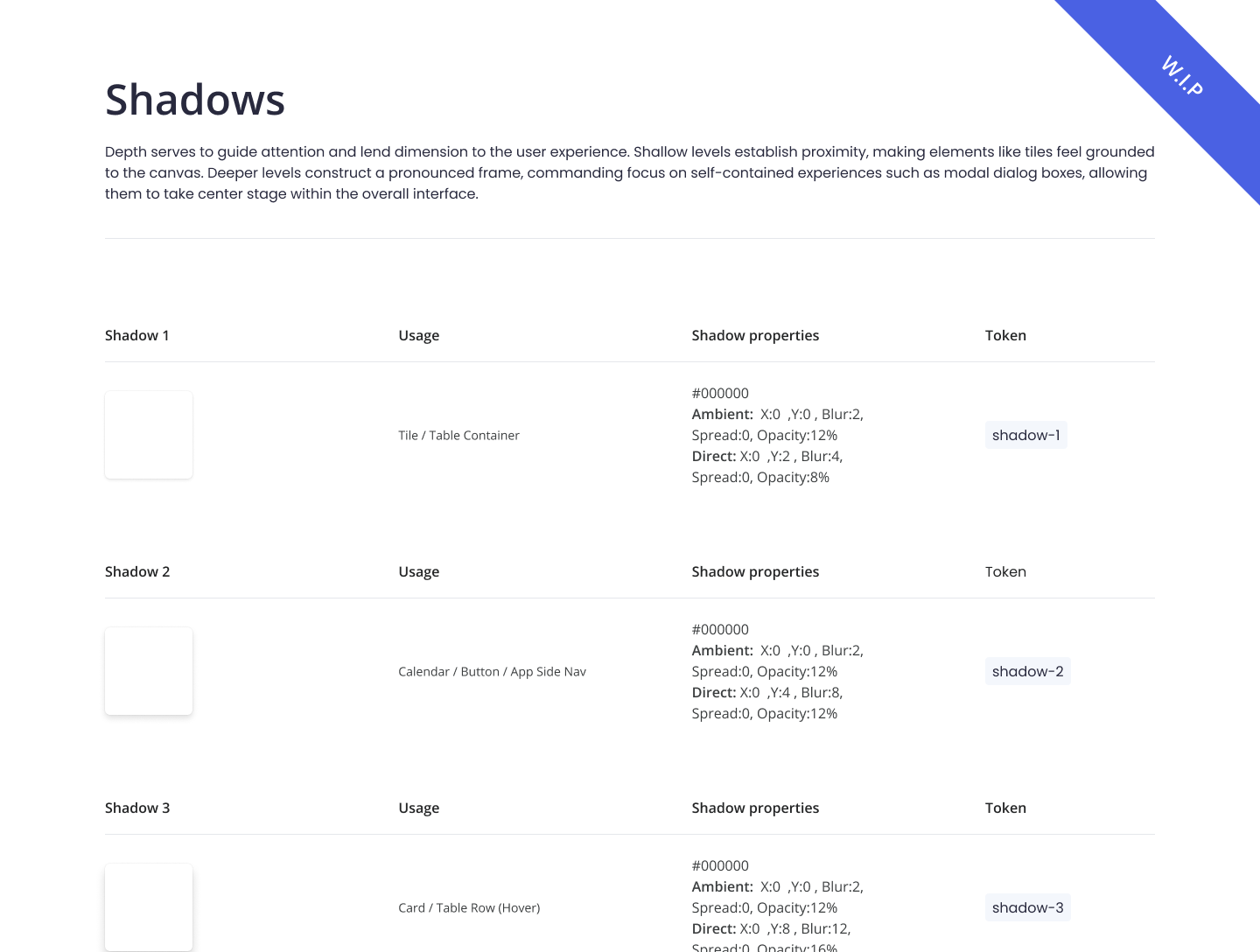
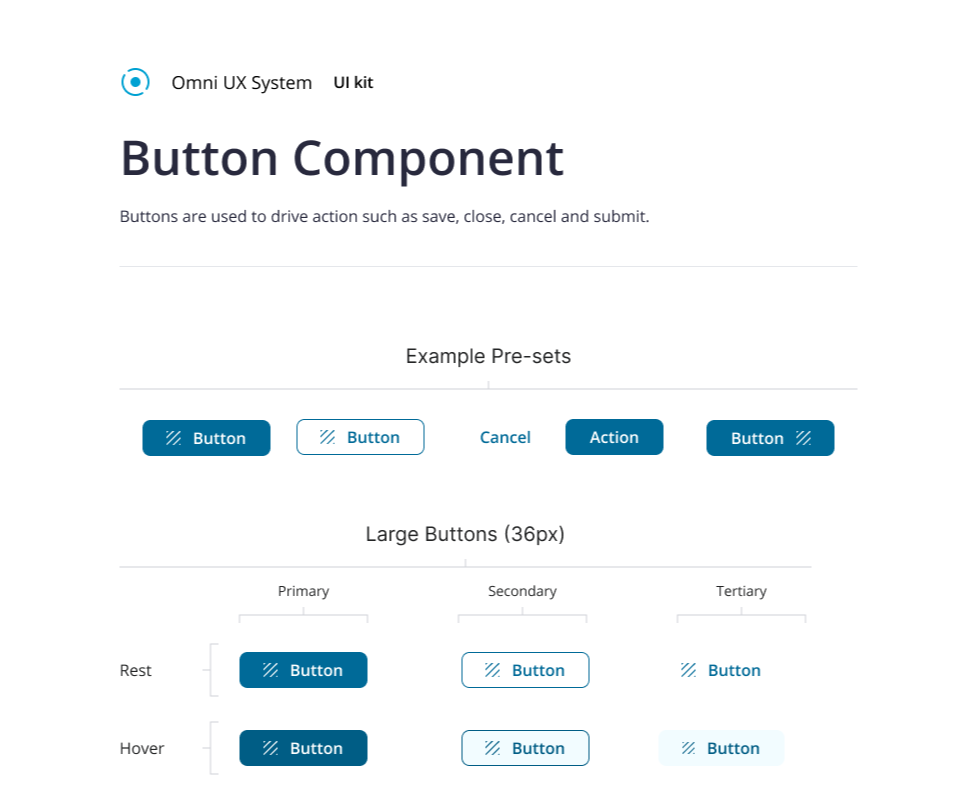
Because Omni had grown as a collection of separate products, there was no single source of truth for interaction patterns.
I led the definition of a shared design system and core component library, giving Design and Engineering teams a common foundation to build from.
Beyond improving consistency, the system helped shift teams from designing individual products toward creating one connected Omni experience.